 Arborist
How to bid a tree job: a pricing method that actually holds up
Bidding a tree job comes down to four steps: estimate the labor and equipment hours the job will take based on size, species, and how hard it is to reach, multiply that by your true hourly cost (labor, equipment, and overhead combined), add your margin, then add disposal and haul-away as a separate line instead of folding it into the labor number.
What actually goes into pricing a tree job
Most operators who ask how to bid a job aren’t new to tree work. They’re new to bidding it consistently, usually because they’ve priced two nearly identical trees a few hundred dollars apart with no real explanation beyond “it felt right,” or because they underbid a job that turned out to have a hidden hazard once the climber was already up the trunk.
A bid that holds up isn’t a guess dressed up as a number. It’s a short calculation you can run standing next to the tree, using variables you can see: what the tree is, how big it is, how hard it is to reach, and what could go wrong once the work starts. The rest of this guide walks through those variables, then a step-by-step method for turning them into a number you can defend if a customer asks why it costs what it does.
Start with the variables that actually move price
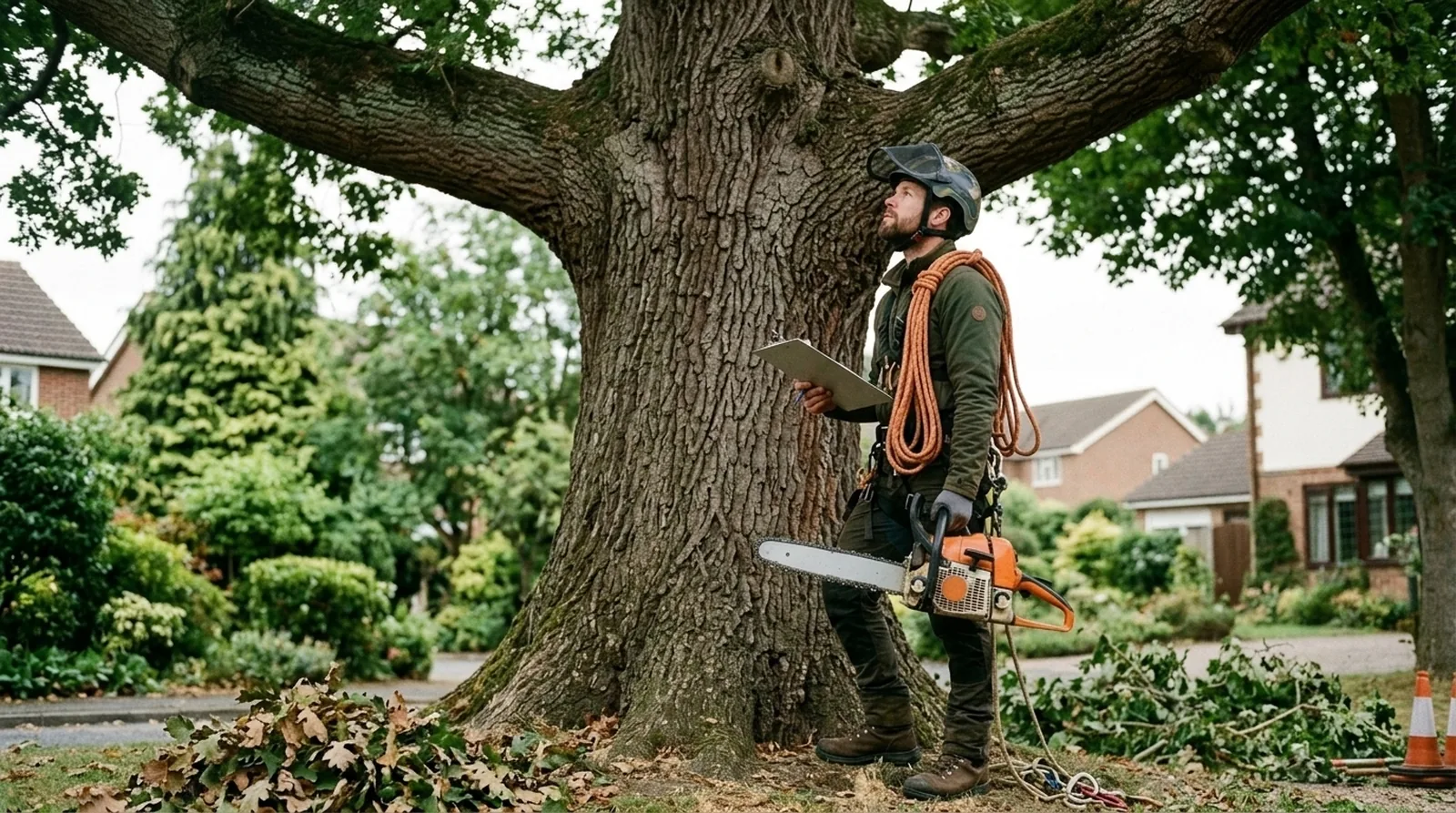
Height alone is a weak predictor of what a tree job costs. Two trees of the same height can take twice as long to remove depending on what’s around them and what they’re made of. These are the variables worth checking before you write a number down.
Tree species and wood density
Dense hardwoods like oak and hickory take longer to cut and are heavier to move than softer woods like pine or poplar of the same size, which affects both cutting time and how much your chipper or crew can process per hour. Species also affects branch structure and how predictably the tree comes down, which feeds into the hazard assessment below.
Height and diameter (DBH)
Diameter at breast height, or DBH, is the tree’s trunk diameter measured about 4.5 feet off the ground, and it’s a more useful sizing number than height alone because it tracks more closely with how much wood volume you’re cutting and hauling. A tall, narrow tree and a shorter tree with a wide trunk can end up costing about the same to remove for different reasons, so size the job by both measurements, not just how tall it looks from the street.
Access: crane clearance, fence gaps, and distance to structures
A tree in an open front yard with a driveway next to it is a different job from the same tree wedged between a fence, a shed, and a neighbor’s property line. Check whether a bucket truck or crane can actually reach the tree, whether debris has to be carried out by hand instead of dragged to a chipper, and how close the tree is to a structure, deck, or pool that limits where limbs can safely drop.
Hazard factors: dead limbs, lean, and overhead lines
A tree with dead wood in the canopy, a visible lean, or a trunk with internal decay takes longer to bring down safely and carries more risk for the climber, which should show up in the price, not get absorbed as a surprise once the crew is already committed. Proximity to overhead power lines is its own category of hazard: it often means bringing in a line-clearance specialist or coordinating with the utility company before cutting starts, and that coordination time belongs in the bid.
Price by the job, not by the hour, once you know your real costs
Most customers want one number, not an hourly rate they have to guess how many hours will apply to. The way to give them that number without losing money is to do the hourly math behind the scenes, then present the total as a flat job price.
Labor plus equipment cost per hour as your baseline
Before you can price any job, you need a real number for what an hour of work actually costs you: crew wages, equipment depreciation and fuel, insurance, and a share of your fixed overhead, all added together. Skipping this step and pricing off what feels competitive, or what a competitor charged on a similar-looking job, is the most common way operators end up working a full day for less than they’d make on payroll somewhere else.
Why flat per-job pricing wins customer trust
Quoting a flat number for the whole job, arrived at through real hourly math, tends to land better with customers than an hourly rate with an estimated range attached, because it removes the anxiety of an open-ended bill. It also protects your margin: if the job runs a little long because of something you accounted for in the hazard assessment, you don’t have to renegotiate mid-job, since the buffer is already built into the number.
Speed matters here too. According to routing and scheduling platform Upper, roughly 67% of tree service jobs come in under $2,500 (Upper, “10 Best Tree Care Routing Software”), which means most of the work a typical operator bids is smaller-ticket and price-sensitive enough that a customer calling around will often go with whoever gets back to them first with a number that looks well-reasoned. A slow, hand-built quote loses jobs to a faster one even when the slower quote would have been more accurate.
A simple bidding method you can use in the field
This is the calculation, in order, that you can run standing next to the tree or from your truck right after leaving.
- Estimate the hours the job will take. Walk the tree using the variables above (species, size, access, hazard) and put a realistic hour estimate on climbing, cutting, chipping, and cleanup.
- Multiply by your all-in hourly cost. This is labor, equipment, and overhead combined into one number you’ve already worked out for your business, not a rate you’re improvising per job.
- Add your margin. Decide on a target margin ahead of time so you’re not deciding it under pressure while standing in front of a customer.
- Add haul-away and disposal as a separate line. Dump fees, extra trips, and disposal time don’t belong buried inside the labor estimate; they’re real, variable costs that deserve their own number.
- Round to a number that reads as a considered quote. A price that looks hand-picked to look precise, like $1,847, can read as arbitrary. A round number that’s still specific to the job reads as a real quote rather than a rushed guess.
Common bidding mistakes that eat your margin
These show up often enough in tree work, in day-to-day practice and in the stories operators trade on forums like ArboristSite, that they’re worth checking against every bid before you send it.
- Forgetting disposal and dump fees. These get treated as an afterthought and then eaten out of margin instead of billed as their own line item.
- Underpricing crane or bucket truck rental time. Rental equipment often gets budgeted for the job itself and not for the loading, transport, and standby time around it, which quietly adds hours that never made it into the bid.
- No cushion for hazard trees that turn out worse once climbing starts. A tree that looked straightforward from the ground can reveal internal decay, a wasp nest, or a lean that wasn’t obvious until someone was up in the canopy, and a bid with zero room for that discovery either eats the loss or turns into an awkward renegotiation mid-job.
Quoting fast vs. quoting right
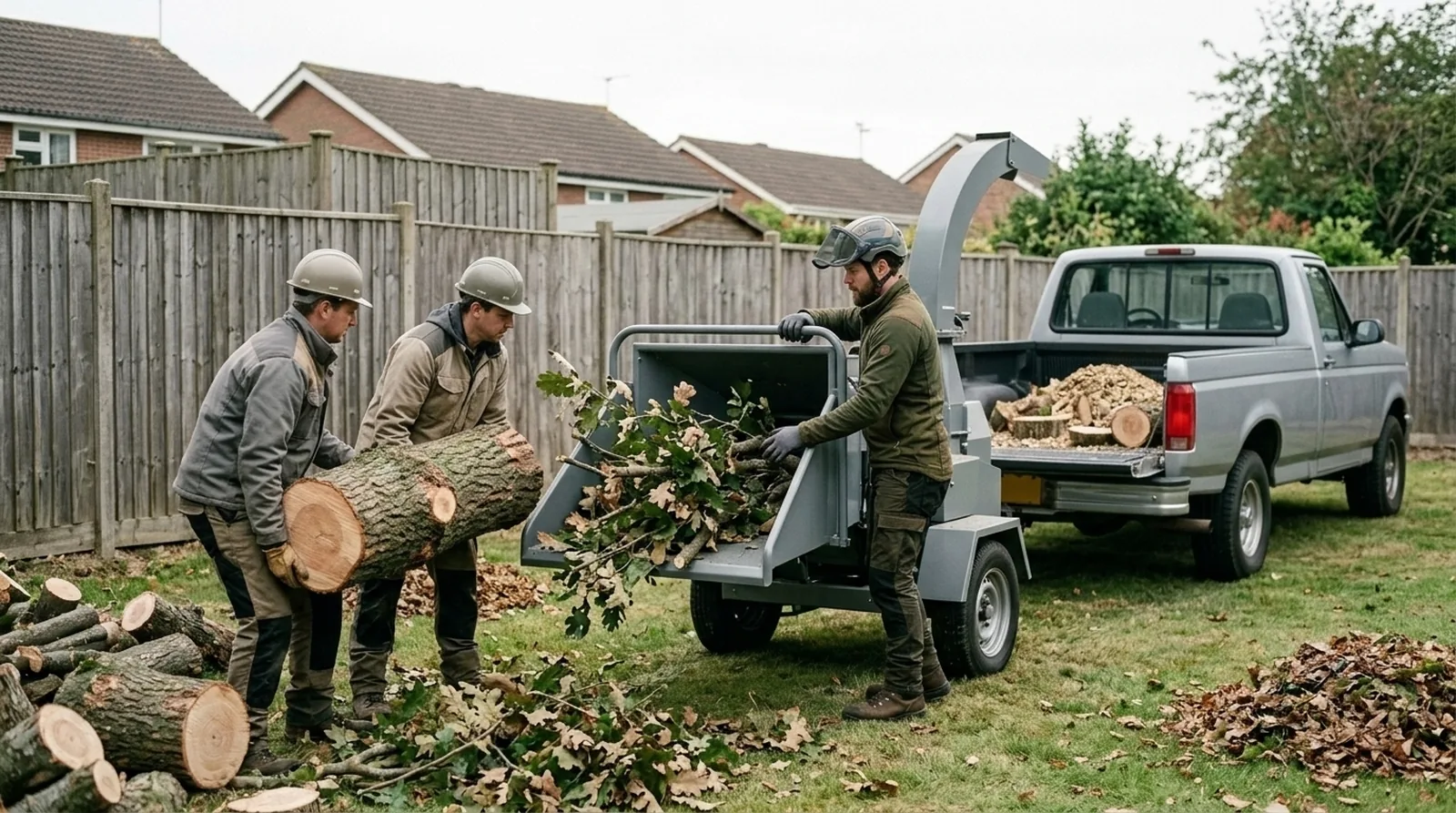
A customer wants two things at once: a quote fast enough that they don’t call the next name on the list, and one accurate enough that it doesn’t fall apart once the crew shows up. Rushing to win the speed race is how the mistakes in the previous section happen. Walking the tree and running the numbers, done quickly enough that the customer isn’t left waiting, is the actual balance to aim for.
That’s mostly a workflow problem, not a math problem. The method above takes a few minutes once you know your baseline hourly cost, but writing it up and getting it to the customer while they’re still deciding is where operators lose time they can’t get back. That’s the gap a dedicated estimate builder closes, turning the method into a quote you can send from the driveway instead of the office that evening.
A worked example
The numbers below are for illustration only, not a market rate for any specific tree, region, or job. Treat the method as the takeaway, not the dollar figures.
Say you’re bidding a mid-size maple removal, moderate access difficulty (a fenced backyard with a gap wide enough for a chipper but not a bucket truck), no major hazard factors beyond a moderate lean away from the house.
- Estimated hours: climbing, cutting, and rigging around 4 hours; chipping and cleanup around 2 hours, for a 6 crew-hour total.
- All-in hourly cost: say your real labor-plus-equipment-plus-overhead rate works out to $85/hour. That’s 6 × $85 = $510.
- Margin: a 30% margin brings the job to roughly $663.
- Disposal and haul-away: added separately, say $150, for a running total of about $813.
- Rounded quote: presented to the customer as $825, a specific-looking but round number rather than an artificially precise one.
None of those inputs are real averages. Your actual hourly cost, your margin target, and your local dump fees will be different, because they reflect your business, not a number pulled from a blog post. If it helps to start from a structured format instead of building one from scratch, a free tree service estimate template gives you the line items to fill in with your own numbers.
Build the same bid on your phone before you leave the driveway. See how estimating works to price jobs on the spot. New to running the business itself? Start with how to start a tree service business.