 Arborist
Hiring and paying your tree crew: what climbers actually earn
This is a guide to what tree climbers and trimmers typically earn in the market, and how to think about structuring pay to hire and keep good crew, not a career guide for someone considering the work. If you’re posting a job or deciding what to offer your first hire, here’s what you’re actually competing against.
What tree climbers and trimmers typically earn
Published pay figures for this trade vary more by source than by region, which is worth understanding before you write a job posting around a single number.
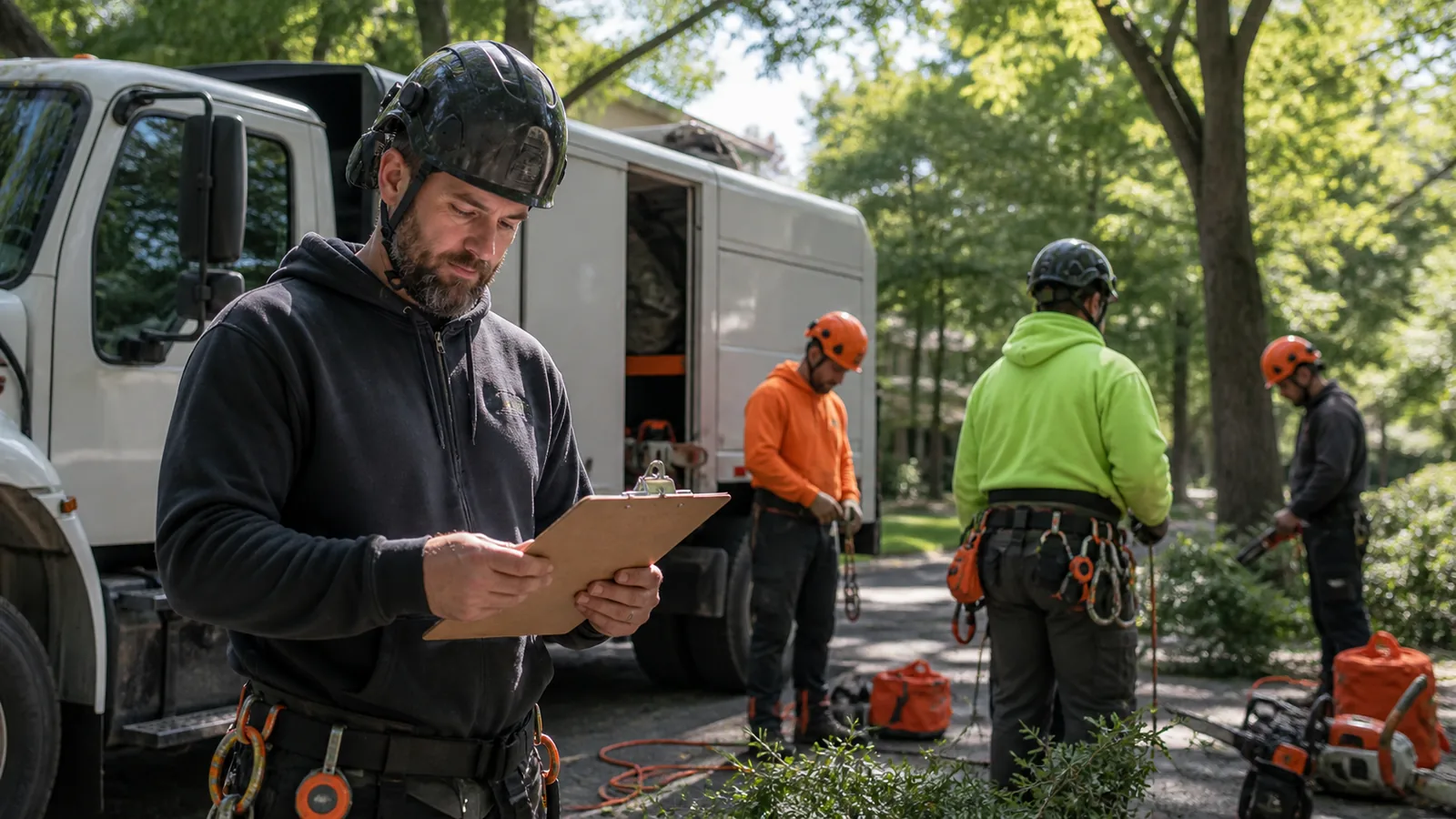
The U.S. Bureau of Labor Statistics tracks this work under “Tree Trimmers and Pruners” (SOC 37-3013), the highest-authority public wage source available. Its most recently published estimate, from the May 2024 survey, puts the mean wage at $26.43 an hour, or $54,970 a year (BLS, Occupational Employment and Wage Statistics, Tree Trimmers and Pruners). It’s a broad category that mixes climbing specialists with general grounds and line-clearance trimming work across the whole industry, and BLS doesn’t break climbers out separately, so treat it as an industry-wide benchmark rather than a climbing-specific number.
Job-board platforms that specifically track the “tree climber” title land in a similar range. ZipRecruiter’s national average for a tree climber is $51,611 a year, or about $24.81 an hour, with the middle 50% of postings falling between $42,500 and $58,500, and the top 10% at $68,000 or more (ZipRecruiter, “Tree Climbers Salary”). Indeed’s aggregated figure for “tree trimmer” runs close behind at $25.95 an hour, based on over 1,000 self-reported and posted salaries (Indeed, “Tree trimmer salary in United States”). Here’s what you’re competing against when you post a job: candidates with climbing experience are likely benchmarking against figures somewhere in this $24-to-$27-an-hour range, whichever source they check, not a number you can undercut without losing applicants.
What moves pay up or down
Experience and certification
ISA Certified Arborist status, already covered in the guide on starting a tree service business, is one of the clearest levers here. It’s not required to run a tree service, but some operators treat it as a pay tier or a signal worth a wage premium, since it reflects standardized, trained safety practice rather than on-the-job experience alone.
Region and local cost of labor
Neither BLS nor the job-board sources above publish a reliable state-by-state breakdown specific to this trade, so treat regional variation qualitatively: pay tends to run higher in regions with a higher cost of labor generally, the same pattern that shows up across most skilled trades, rather than a fixed regional table worth building a pay scale from.
Climbing vs. ground-crew role
None of the published sources above split climbing pay from ground-crew pay directly, since BLS groups them into one occupation and job boards report figures for the climber title alone. It’s a well-established pattern in the trade that climbing commands a premium over ground-level work, given the added skill and physical risk, but as covered in the FAQ below, treat that as directional guidance rather than an exact multiplier.
Hourly vs. piece-rate vs. salary: how tree services actually structure pay
Most tree services default to hourly pay, and for good reason: it’s simple to track, doesn’t require estimating job difficulty in advance, and works for a crew of any experience level. Hourly also fits how much of this work actually happens: storm response, hazard removals, and a first job on a property nobody on the crew has seen before are hard to price accurately ahead of time, so paying for time worked rather than guessing at a per-job rate keeps both sides honest.
Some operators shift experienced climbers to a per-job or piece-rate structure once their output becomes predictable enough to price fairly. This rewards speed and skill more directly than a flat hourly rate does, since a fast, experienced climber effectively earns more per hour worked. It adds real complexity, though: piece-rate pay only works fairly if the jobs being priced are actually comparable in size and difficulty, and it’s rarely the right starting point for a new or small operation still building that track record.
Piece-rate also carries a safety and quality risk worth naming directly rather than glossing over. Paying by output instead of time can push a climber to skip a rigging step, take a riskier line through the canopy, or rush a hazard assessment to finish faster, since the pay structure rewards speed over caution. It shows up on the ground too: cleanup gets rushed, property protection like plywood and ramps gets skipped to save minutes, and callback complaints about missed debris climb. None of that means piece-rate is a bad idea, but it means it belongs on job types that are genuinely standardized, routine trims on a maintenance route, for example, and not on removals, hazard trees, or anything near a structure or power line, where an incentive to hurry is the last thing worth having in play. Tree care already sits in one of the higher-risk classifications insurers price for, and a crew’s safety record feeds directly into what workers’ comp actually costs the business (1-800 Insurance, “Workers’ Comp for Tree Service”), so a pay structure that quietly rewards rushing works against that.
Operators who do make the shift tend to do it gradually rather than all at once. A common middle ground is keeping an hourly base and layering a bonus on top for jobs finished under the estimated time, rather than moving a climber to pure piece-rate on day one. That hybrid keeps the safety incentive intact while still rewarding the climbers who are genuinely faster, and it gives a newer hire time to build the track record that makes a true per-job rate fair to price in the first place.
Salary is uncommon below a certain crew size in this trade, since the work is inherently variable by season and weather, and hourly or piece-rate pay tracks that variability more honestly than a fixed paycheck does.
When to raise pay, and how much
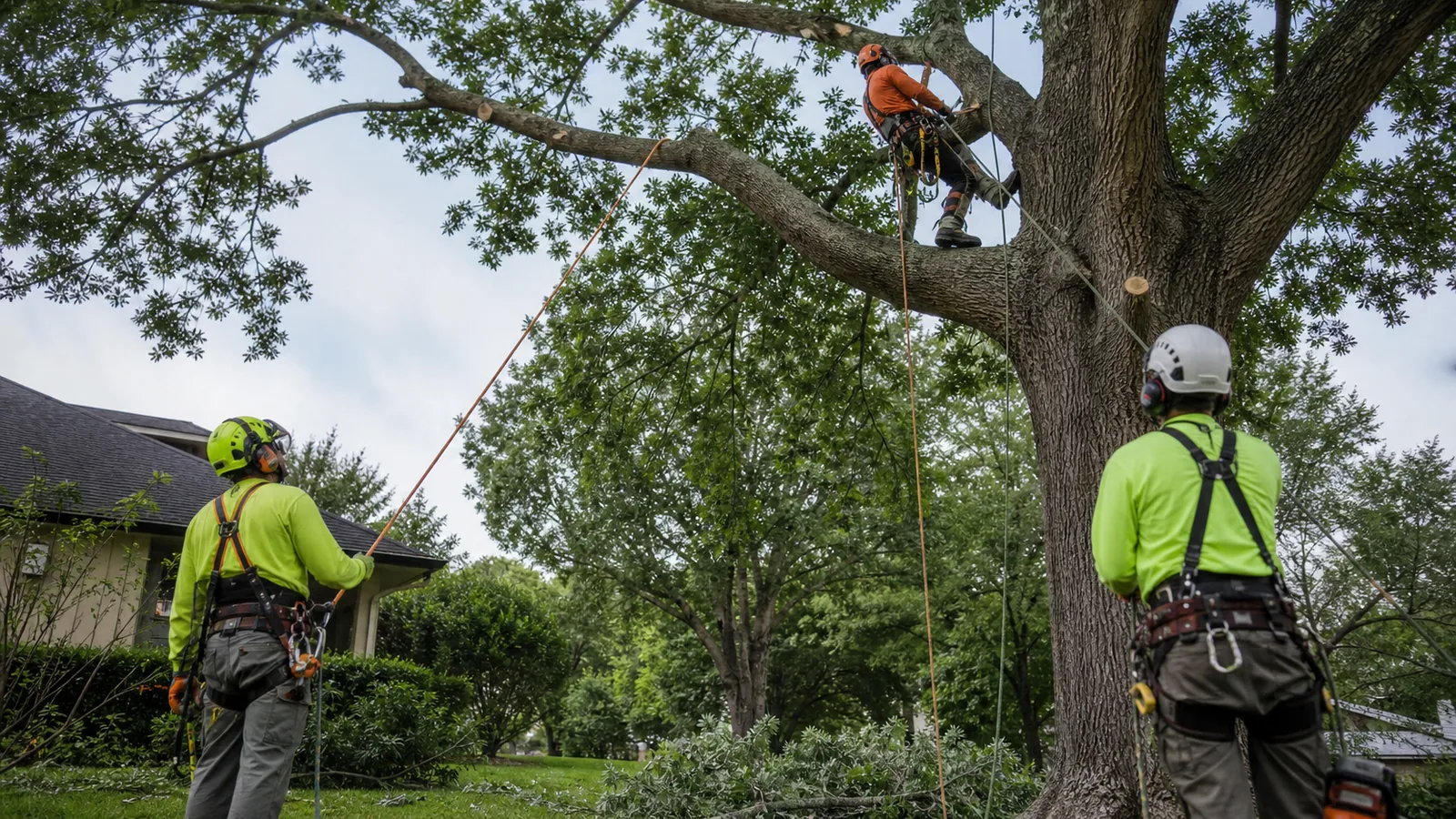
Tying raises to something concrete, certification, tenure, or expanded responsibility, works better than a flat annual bump handed out regardless of performance. A climber who earns ISA certification, takes on a lead role, or has stayed a full season through the busy stretch is a clearer case for a raise than time passing alone.
Underpaying relative to the local market is one of the more common, and most avoidable, reasons operators lose good climbers to a competitor. A crew member who could earn meaningfully more elsewhere doesn’t need a dramatic gap to start looking, and by the time a resignation happens, the cost of finding and training a replacement usually exceeds what the raise would have cost.
Retention runs on more than the number on a paycheck, though. A crew that can count on steady hours through the shoulder season instead of layoffs and rehires every spring, that works with gear that’s actually kept up, and that sees the safety commitments from the job posting hold up on real jobs tends to stick around longer than a crew that’s paid well but constantly guessing what next week looks like. Pay gets a climber in the door; the rest of it is what keeps them from taking a call from a competitor.
Writing a job posting that actually attracts climbers
A posting that lists a realistic pay range, states what equipment is provided, and describes the safety culture on the crew tends to attract more serious applicants than one that’s vague on all three. Postings that skip the pay range entirely are one of the more common ways operators lose good candidates to a competitor who lists one, since an experienced climber comparing several openings will often filter out the ones that make them ask first.
A posting built around the climber’s actual day works better than a generic labor listing. That starts with naming the role clearly, climber, ground crew, or trimmer, rather than folding it into a catch-all “landscaper” or “outdoor laborer” title, since an experienced climber scanning job boards will often skip past a posting that doesn’t name the role they actually do. It also means being specific about equipment: which saws, rigging gear, and PPE the company provides versus what a climber is expected to bring. A posting that’s vague here reads as a company that hasn’t thought the job through, and one that expects a climber to supply their own saw or climbing gear filters out candidates who’d rather work somewhere that equips the crew properly. Being upfront about the seasonal, weather-dependent nature of the schedule saves both sides time, too. It’s not a hidden downside of the trade, and candidates who’ve already worked in tree care expect it.
Worth including alongside pay: a growth path (what it takes to move from ground crew to climbing, or from climbing to a lead role), and anything that signals safety is taken seriously, since climbers in a trade with this kind of physical risk profile weigh that alongside pay when deciding where to apply.
Screening the responses that come in carries its own version of this. A resume with several short stints isn’t automatically a warning sign in a trade this seasonal, but a candidate who can’t speak concretely about safety practices, certifications, or the climbing method they claim to use is worth more caution than one with a shorter resume and real, specific answers. Asking a candidate to walk through how they’d approach a specific hazard, a leaning tree over a fence line, say, tends to surface more than the resume does on its own.
How labor cost fits into what you charge
Paying a fair, market-competitive wage only works if your pricing accounts for it. Labor is usually the largest single cost line in job costing for tree service, and it’s the base input in the hourly rate calculation covered in the guide on how to bid a tree job: what you pay your crew, plus equipment and overhead, becomes the number you multiply by estimated hours to arrive at a bid. Raising pay without adjusting that rate is how a well-intentioned raise quietly erodes margin instead of just changing a line on a paycheck.
Once you’ve got crew on the schedule, keeping their assignments visible matters too. ArboristDesk’s scheduling keeps everyone’s jobs visible without a group chat, so a growing crew doesn’t turn into a coordination problem on top of a payroll one.

Hiring is usually a sign a business is growing past solo operation. Check pricing when you’re ready to see how ArboristDesk scales with your crew.